mardi 7 août 2012

Bonne Fete de l'Independance!

Woohoo, Happy Independance Day Cote d'Ivoire!  52 years of "cooperation, hardwork, and development."
Vive la Cote d'Ivoire!

If only they could say "peace" as well.  :(

I guess one of the potential benefits of colonialism's sudden end is that at least for the former French colonies, the large majority of them received their independance the same year and thus it is easy to keep track of what number anniversary it is each year in each country.  Cote d'Ivoire, Senegal, Mali, Togo, and Cameroon, and many other pays francophones achieved independance after many years of colonial rule, over a few months in 1960, meaning that 2012 is 52 years.  When I left Senegal in 2010, it was a month after an enormous, and very important 50th anniversary celebration.  Senegal cheered it's peace and culture with Wade's terrible eye sore  beautiful triumph to African culture, the Monument of the African Renaissance.
You can't help but mock this statue.

Jokes about the Monument aside, and some rough times pre-election this past year, Senegal has maintained la PAIX.  PEACE. JAMM (or DIAM, for the fr. spelling).  Even with occasional separatist skirmishes or banditry in the southern Casamance area (below The Gambia), it has maintained large-scale peace.  This is quite an accomplishment in a region that seems to be falling to coups, wars, and general instability everywhere.

If you ask a Senegalese about peace, they may tell you that it goes back to a culture that across ethnic groups and personalities, appreciates a good joke and some sugary tea.  No seriously, you sit around with your friends and neighbors making fun of each other for last names, ethnic groups, favorite food, whatever, and before you can have a chance to get seriously angry, it's tea time!  [Not to say Senegal as a geographic space has been peaceful since time began, there were wars with the Pulaars and the slave trade and other terrible stories, but in "very recent memory."]  There are many other theories for the peace, but I think some of it has to do with their great sense of humor.
Note: I am not saying Ivoirians don't have a sense of humor, they definitely do!  But there's just something different in Senegal that keeps the peace coming.

Senegal's Independance Day was April 4, with many other countries following, and eventually Cote d'Ivoire on August 7.

As I posted on my first CI post about the conflict, Cote d'Ivoire has had a much different and sadly more violent past...perhaps it would just be better to say that the "New Millennium" hasn't been very kind to the country.  The country's first "President" was Félix Houphouët-Boigny who "ruled" (as Wiki says) from 1960-1993, celebrating independance while maintaining close ties to France, whose leadership and meticulous planning led to investment, prosperity, and development for the country.  Since the 1999 Coup, however, things have been "hot" or "warm" in the country ever since, and I am not talking abou the weather.

Ok, this post has been all over the place but really, I just wanted to post a notice to all about some of the violent skirmishes and attacks that have recently moved from the western border with Liberia (this link is only provided so that people don't confuse it with Libya) and northern areas and into the economic capital that is Abidjan. In the west, there is a lot of hangover from past wars in the areas (think Liberia, Sierra Leone) and some ethnic warfare and retaliation, which keeps my project and many others from doing much of anything out that way.  The north has also been tense over the past several years due to displaced persons from Burkina and other countries coming in, so we mainly stay in the south and east.

Anyways, the government had recently begun tearing down some of the remaining rebel camps/barracks in different parts of the country, and that upset various groups of people, including, apparently, those loyal to former prez Gbagbo, who is currently in trouble in The Hague.

Check it out:
BBC News
Cote d'Ivoire is heating up, en francais

There was a small attack near Abidjan a few weeks ago, though I didn't hear about until a week or so later, but things picked up this weekend, with events Sat/Sun and Monday morning in multiple areas in and around Abidjan.  DON'T WORRY: they are NOT in the part of time where I live/work.  The State Dept Travel Alerts and Embassy sent out TONS of email alerts the past few days with updates and recommendations (low profile, avoid crowds and military personal, stay away from areas where attacks have been known to happen, etc), so have no fear.  I do, however, wish that the Peace Corps system of color-coded party pagnes also worked here, but alas.  The skirmishes are all between current military and the rebel troops and extremely targeted, but emphasize the precarious situation that exists here.

In response, President went on TV last night to encourage calmness for the fete today and also emphasized that security (meaning UN troops, police, soldiers, etc) would be stepped up across the city and especially in the "HOT" areas that had the attacks.  UN trucks and SUVs are always a presence in the city and there is a GIANT UN compound right outside, thanks to the ONUCI, or United Nations Operations in Cote d'Ivoire.  While I think a big concert was planned in a park today, needless to say, there will not be fireworks tonight.  Clips from the military parade this morning were shown on national TV tonight and emphasized the Special Forces troops, sporting freaky masks and others with coast made of leaves.  Not even kidding.  Unfortunately, I do not have a picture of it nor can I find it online.  He also emphasize that large-scale demilitarisation will continue and be stepped up, which needs to happen, but is also not bound to make those leading some of these attacks very happy.

I am not trying to freak anyone out, but just wanted to keep people informed and also share some of the realities that come while working in a conflict or post-conflict/recovering country situation.  Abidjan is a cool city and the countryside is absolutely beautiful, so I am hoping and praying that lasting and stable peace comes to the country.

A view looking out on the political capital of the country, Yamoussoukro.

That's all for now!  Happy 52 Years to this beautiful country and people!


P.S. Sorry for all of the Wikipedia links that I know no one will use...it just gets a little too addicting when you want succinct information on a specific topic, over and over and over.

vendredi 3 août 2012

Today on the BBC

Cote d'Ivoire in the News

It's not a super happy post, but just shows a little about how far CI has come and how much still remains.

mardi 31 juillet 2012

An Intro to My Practicum


So what am I doing in this fine and recovering West African country?  Well, it’s part of my Master’s Practicum, which is a 6 month internship that leads to a thesis so that I can graduate in May 2013 with a Masters of Science in Public Health.  My internship is with the Center for Communication Programs (CCP), who I have been working with part-time since October 2011.  I actually met them while I was still in Senegal in 2011 and have been on the NetWorks and Senegal teams this past year, supporting projects that promote mosquito net use and behavior change communication to reduce the malaria burden in multiple countries.  In June, I went full time, divided between NetWorks and a HIV/AIDS prevention project in Cote d’Ivoire called PACT (Participation Active et Communication Transformatatrice), which consists of several different programs in Cote d’Ivoire, especially with youth and young adults 18-30, called Super Go, Sports for Life, and African Transformation. We work through various NGOs around the country to run these programs and the office I'm at oversees everything.

This past spring, as I was trying to decide what to do for my Master’s Practicum, I found out that I received a small travel grant to go to Cote d’Ivoire with the PACT project and then NetWorks proposed sandwiching Cote d’Ivoire with two of their countries, Senegal and Benin, in order to do an awesome malaria-HIV/AIDS mash-up practicum focusing on training/education and formative research--super exciting and it seemed like I had found the perfect Practicum for my interests, past experiences, and future goals and skills learning.  Needless to say, an opportunity to use my recently renewed (and thus EMPTY) passport and get 3+ stamps beat out a different practicum possibility that was Baltimore confined but with an awesome international maternal and child health organization that I would LOVE to work for when I graduate.

Unfortunately, Senegal and Benin fell through at the last minute, bringing my time abroad down from about 16 weeks to just 8, bummer!  But, I’m back in West Africa and speaking French every minute of every day, so that’s pretty awesome.  My originally planned activities here got majorly delayed (oh international development!!!), so my work is changing to be a lot of technical assistance with some baseline surveys for African Transformations, leading formative research for a TV series/soap opera that entertains and educates about HIV/AIDS (see Intersexions in South Africa), and doing some preparation for a big strategic leadership course that will be happening in October.

Hopefully the work will still be interesting, though it's less time "in the field" than I would like, at least it's something.  Also, due to the nature of where I work and the fact that we have to go through a lot of ethics approvals, the fact that we have "competitors," and because I daily work with people who are all over facebook and the web, I probably won't actually be talking about any major details of what I'm doing or able to post a lot of pictures of things, but we'll see :)


Returning to West Africa


Rekindling the blog, two three weeks late.

So where am I now?


Cote d'Ivoire!!!  Or to the non-francophones, Ivory Coast!

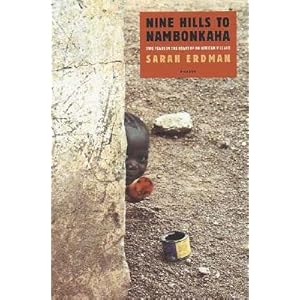
I was first introduced to CI probably in middle and high school French classes, and vaguely talks about the war while in college, but was really introduced to it when I read Nine Hills to Nambonkaha before joining the Peace Corps in 2008.  It's the story of Sarah Erdman, who was a rural health education volunteer like I was, in a small village in northern Cote d'Ivoire, right near the border with Burkina Faso.  [Actually, one of the PCVs in my stage's older brother served in Peace Corps Cote d'Ivoire with the author, if you believe it!]


Here’s a little about what the CIA World Factbook says:

Close ties to France since independence in 1960, the development of cocoa production for export, and foreign investment made Cote d'Ivoire one of the most prosperous of the West African states but did not protect it from political turmoil. In December 1999, a military coup - the first ever in Cote d'Ivoire's history - overthrew the government. Junta leader Robert GUEI blatantly rigged elections held in late 2000 and declared himself the winner. Popular protest forced him to step aside and brought Laurent GBAGBO into power. Ivorian dissidents and disaffected members of the military launched a failed coup attempt in September 2002. Rebel forces claimed the northern half of the country, and in January 2003 were granted ministerial positions in a unity government under the auspices of the Linas-Marcoussis Peace Accord. President GBAGBO and rebel forces resumed implementation of the peace accord in December 2003 after a three-month stalemate, but issues that sparked the civil war, such as land reform and grounds for citizenship, remained unresolved. In March 2007 President GBAGBO and former New Forces rebel leader Guillaume SORO signed the Ouagadougou Political Agreement. As a result of the agreement, SORO joined GBAGBO's government as Prime Minister and the two agreed to reunite the country by dismantling the zone of confidence separating North from South, integrate rebel forces into the national armed forces, and hold elections. Disarmament, demobilization, and reintegration of rebel forces have been problematic as rebels seek to enter the armed forces. Citizen identification and voter registration pose election difficulties, and balloting planned for November 2009 was postponed to 2010. On 28 November 2010, Alassane Dramane OUATTARA won the presidential election, defeating then President Laurent GBAGBO. GBAGBO refused to hand over power, resulting in a five-month stand-off. In April 2011, after widespread fighting, GBAGBO was formally forced from office by armed OUATTARA supporters with the help of UN and French forces. Several thousand UN peacekeepers and several hundred French troops remain in Cote d'Ivoire to support the transition process

Not super optimistic, huh?  It's a beautiful country that after a promising start has suffered tragically.  Cote d'Ivoire also has one of the highest HIV prevalence rates in West Africa, estimated at 3.4% in 2009.  The US government does not have much going on in CI, apart from the President's Emergency Plan for AIDS Relief, or PEPFAR.

In terms of places to go and things to do, Lonely Planet is pretty unhelpful since tourism has suffered greatly due to the war and crisis, leaving me at a loss for what to do on the weekends, but coworkers are helping fill some of the time up.  The UK Trip Advisor has a little more going for it in terms of information about places, shopping, and more.

I’ve traveled to a lot of new places on my own, but always meeting up with people somewhere along the way.  This is my first time without a group of people in my similar situation or job, if you will, so that's a new change which means I'm spending less money on phone credit and more time wandering around the neighborhood to see what there is.  It's exciting and I'm enjoying learning about a new place, but that is the subject for another post, coming soon!

samedi 21 juillet 2012

Third Goal

So here's one of 5 blog posts I started last summer and never finished, yikes!  This was actually all ready to go and then, BAM! nothing.  And by nothing, I mean I left Senegal, stopped briefly in Illinois, and started grad school within about 8 days.  A little intense.  So this is old, but here it is.


I've never talked about this before, but the Peace Corps is comprised of 3 different goals that define its mission in the world.  These three simple goals are as follows:
1. Helping the people of interested countries in meeting their need for trained men and women.

2. Helping promote a better understanding of Americans on the part of the peoples served.

3. Helping promote a better understanding of other peoples on the part of Americans.


Goals 1 and 2 are obviously work that happens during your PC Service, as does Goal 3, but it's this last goal which they tell us we never can stop doing.  Every PCV is told to "bring it home!"


The Third Goal is...


If you click on the link for Regions, Africa, my pictures are currently the first 3 that come up (probably because they are the most recently uploaded).


**Please note, this above point is probably no longer relevant as it was WELL over a year ago that I started this post.  Still check it out though, I'm still bringing the Third Goal wherever I can.


dimanche 28 août 2011

Posh Corps!

So I wrote this post August 28, 2011 and it may or may not have actually gotten published on the blog, but for whatever reason, I can't find it.  So here it is:


Here's an interesting article that came in my weekly Google Alert for Peace Corps: Peace Corps vs Posh Corps.  It's written by a current Botswana PCV who is also/has been a writer for the Huffington Post.  I've been reading his entries and it's always interesting to hear what someone else's PC experience is, and how they relate that to the greater public (Peace Corps' famous Third Goal).

I thought it would be interesting to take the questions posed about Botswana in terms of my own PC service, especially since I had a very "stereotypical" Peace Corps experience (and wouldn't have wanted it any other way!).


What did the application process require for you?

I started my online application in November 2006, paused it for a few months while I freaked out about the 2 year commitment and finally submitted it on April 8, 2007.  A month later, I had my interview in Virginia, was nominated (though never told when, where, or what sector) and spent the entire summer going through the obnoxiously important medical and dental clearance, while working 2 jobs and experiencing the young adult life in DC.  I was cleared in late September (after getting 2 wisdom teeth removed), invited to Morocco in November (declined), re-invited to Senegal in early December, and started Staging on March 10, 2008.  All in all, 11 months from submission to plane ticket!


What did you do during your pre-service training?
Our PST was an 8.5 week exhausting and disastrous experience as PCSenegal transferred between two different training styles, from Center-based to village-based and my Stage (group) was stuck in the middle of the two.  The main goal of PST is to get Trainees/new PCVs capable of functioning in terms of language, safety, cross culture, and medical needs, plus some technical skills as possible.  From 8am-5:30 M-F and Saturday 8am-12:45pm we were in class, mostly language so it was myself, Chris, and our language trainer Fatou running Serere drills all day.  Med taught us how to take care of ourselves when we got sick and we also received some intro health education training for our sights.  

How was the housing situation?
Back of my hut when I moved out
During PST, I lived in a room in a house with my small host family.  For the two years of my Service, I lived in a 9 by 12ft clay and cement hut with a grass roof in a compound with 50+ people.  No electricity, no running water.  My headlamp, mosquito net, and private douche (pit latrine) were some of the best things about my hut (next to the bright colors and sunlight).  That and the 4 lucaena trees I planted when I moved and that quickly grew to be 15+ feet each (ok, one died as I was COSing).  My hut was my space and while I would occasionally invite the kids in to help with mosquito lotion or to color, or others to help with animal infestations and other such things, it was mostly a private space which I desperately needed with so many people running around our compound.  My family was awesome and took care of all of my meals.  Breakfast was usually millet and milk in my room, lunch was rice with peanut butter sauce with each side of the family, and dinner was millet with spicy fish water or leaf sauce with the family.


What were the food options for you? 
Oops, well I guess I already answered this, but I'll elaborate.  I mostly ate with my family.  Many PCVs do breakfast on their own, whether it be bean sandwiches down the street or in the road town, or oatmeal in their huts, my family had almost year-round fresh from the cow amazing milk which I LOVED, so I didn't develop my own breakfast habit.  Lunch was mostly rice with peanut butter sauce, but occasionally we would have a delicious onion sauce called Yassa or the national plate, Thieb u jen (rice and fish, a meal that was very rare in my village because of the rice and vegetables necessary to cook the dish).  Dinner was millet couscous (resembling wet sand) with some type of sauce, beit spicy fish water, leaf sauce, or a peanut butter bean sauce.  There wasn't much variety but being in the Delta we had more regular access to fish (even if it was tiny and not always that great) than people farther inland, so the protein was greatly appreciated!  I mostly loved eating with my family but would occasionally make an egg and veggie sandwich or cook some home grown zucchini to give myself a break and consume much-needed vitamins.  In Kaolack, I mostly subsisted on bean sandwiches for breakfast and fresh yogurt with bananas for lunch and dinner, with an occasional Senegalese-style hamburger.  My mouth is salivating just thinking about these meals, yum!


What did you do for transportation?
Around my village or to Djilor: feet all of the way!  I was known in the area as "fast walking Khady" because I could regularly walk faster than most people (except the teenage boys hurrying to Djilor so they wouldn't be late for 8am class...).  The path from Djilor to my village was deep sand 8 months of the year and flooded the rest of the time so bikes never made sense.  The vehicle of choice along the path was a donkey or horse cart called a sharet (which many will remember I took a terrible fall from one during my first 10 days in the village).  To my weekly market town and old post office, or to Kaolack, we would take an ancient overloaded bus type thing called a Diagan Ndiaye (or Alhum or mini cars, depending who you ask).


Did you get sick?

Yes, many a times and many strange things that weren’t necessarily illnesses but infections, parasites, or other things that just wanted to attack my body for all it was worth.  The PC Med Staff were pretty responsive and we were given medical kits with all sorts of meds and antibiotics for various types of illnesses, infections, and GI issues, so I was never that worried, though laying on my floor with a fever and serious diarrhea was always a terrible feeling, especially on major religious holidays in the vil.

How was the social life?
So this question in the article seems to focus mostly on dating and relationships...A fair amount of PCVs date locals and there's typically at least one Senegal PCV in each Stage who marries a Senegalese by the end of her service (because let's be honest, they are almost all female PCVs who locals).  Peace Corps social life is full of scheduled holiday parties, Regional House social time, road town hangout (especially at Farba's after picking up mail in Djilor), or spending time socializing with the people in your community.  In my opinion, the social time with the people in my village was the most important and memorable, followed by hanging out with nearby fellow PCVs (but in a way where you are also hanging out with locals, so in the middle of your compound, at a school fete, etc).  The Sereres love to sing, dance, wrestle, and just generally celebrate life, so there was a plethora of social things to do, just perhaps not quite as "exciting" as college or big city social life, but whatever!


As for dating, check this out. Brand new, perfect timing! (Well, it was brand new when I first started this post a month and a half ago)

What did you do to communicate with people at home and were there any modern types of entertainment?

Mostly through email though my parents would call about once a week or once every other week via skype to my cell and a handful of friends figured out Skype enough when I was in a city with internet.  Gchat was awesome and I especially appreciated friends and family who sent care packages.

The HuffPost article talks about movies and movie theaters as modern types of entertainment.  Well, until after I COSed in May 2010, Senegal didn't even have a movie theater!  Ok, they used to in the 1990's in a few cities and then they fell into disrepair (the one in Thies in part due to Wade and politics).  In July 2010, Wade opened a Western style shopping mall complete with a bowling alley and movie theater that was showing Harry Potter the last weekend I was in country before flying back to America a few weeks ago.  There's radio and TV that work to varying qualities, and in cities students have access to internet and Facebook


How did you report the work you were doing?
We had things known as quarterly reports which were basically word documents we filled out about our work over a 3 month period and emailed to our supervisors.  As I was leaving, PC Worldwide was implementing digital reports but had some bugs.  I loved turning in my QRs because my supervisor would then give encouraging feedback and comment on my projects, and really I just liked knowing that someone knew what I was up to in my vil.

I must admit, if you read the original article, I feel like my service had more in common with the Bostwana RPCV from the 1960s than the current one, ha!  This post wasn't quite as interesting and insightful as I had originally envisioned, but almost 2 months later, it's time to finally post it.

Here's also a reality check on Why NOT to Join the Peace Corps


And a little side comment, stolen from a friend's facebook:
A man falls down a well and calls for help. A passing missionary hears his pleas and drops a Bible down the well. Next an aid worker stops and drops down some money. A Peace Corps Volunteer hears the man screaming, drops down a bag, then leaps into the well. “What are you doing?” asks the startled man at the bottom of the well. “I’ve come to live with you,” the PCV replies.


vendredi 1 juillet 2011

Jeudi Vert

aka Green Thursday, the day things changed in Senegal.

Things are calm and the curfew has been lifted, but obviously there are still tensions as the country waits for the President and the government to make the next step.  Peace Corps and the US Embassy continue to do a great job keeping us safe and informed on what is going on.